November 2026 — Mars Meets Jupiter, Voyager One Light-Day Out & Skywatching Tips
Hello Stargazers! Here is this month's Skywatching Tips and News.
What's up in the November sky?
From NASA: What's Up: November 2026 Skywatching Tips from NASA →
Skywatching highlights
- Around Nov. 5 — Southern Taurids peak; occasional bright fireballs
- Around Nov. 12 — Northern Taurids peak; around five meteors per hour under ideal conditions
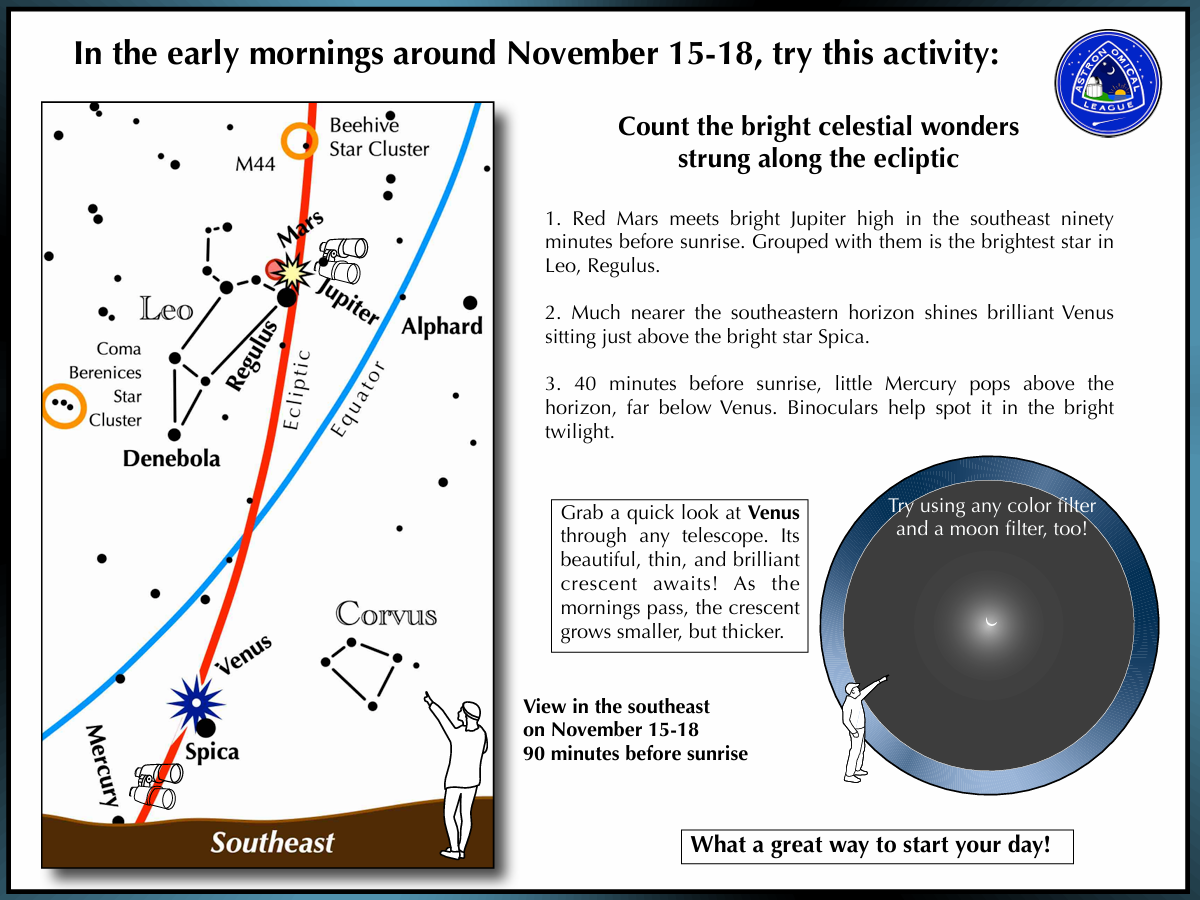
- Nov. 15–16 — Mars and Jupiter appear 1.2 degrees apart before sunrise
- Nov. 17 — Shine Bright for Voyager's Light-Day activation
- Nov. 17–18 — Leonids before dawn after moonset; up to around 15 meteors per hour under ideal conditions
- Nov. 24 — Full supermoon; first in a series of three consecutive supermoons
This month's sky maps
- November 2026 Evening Sky Map (PDF) — from Skymaps.com
- November 2026 Night Sky (PDF) — from the Astronomical League
Mars and Jupiter in the morning sky
Jupiter and Mars will appear to be close to each other, and maybe Venus will also be visible:
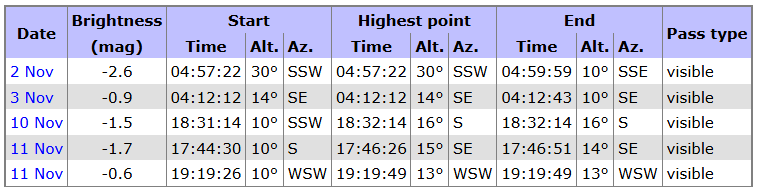
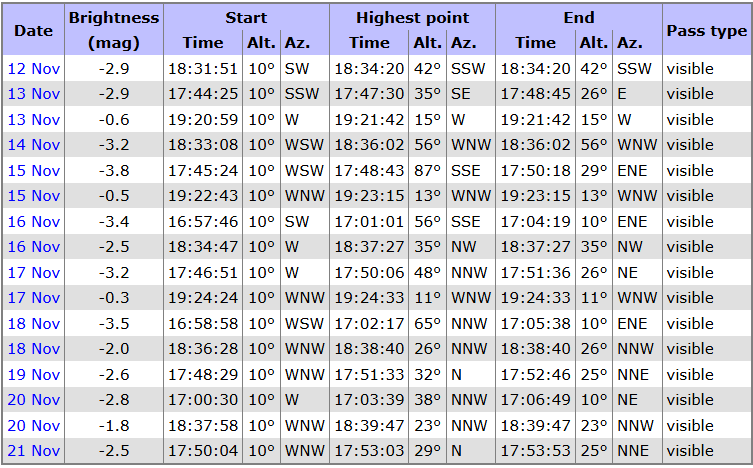
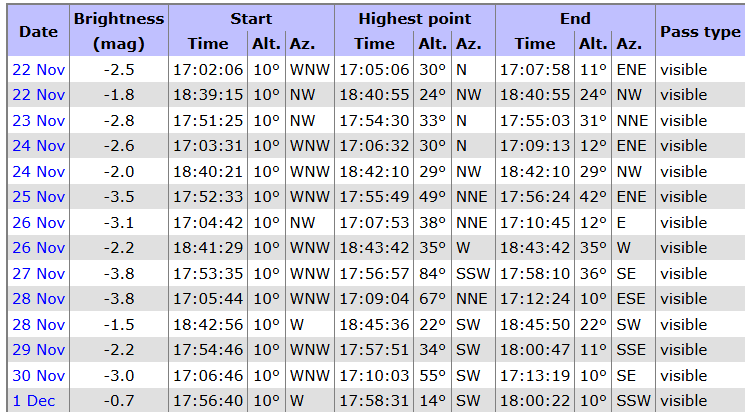
International Space Station passes in November
(from heavens-above.com)
Voyager 1 reaches one light-day from Earth
On November 17, Voyager 1 will be one light-day from Earth. It was launched in 1977. Read about it here: November's Night Sky Notes: Light-Day Away — NASA Science.
If you need a refresher on how long one light-year is, watch this short video: What is a light-year? — NASA Science.
Thank you to our volunteers
A big Thank You goes out to Bob Krueger, Rick Zoerb, Brian Knipfer, and Alan Ewan for participating at our events, along with a few others — Lights Out at Nicolet College, the Camp American Legion Stargazing and Space Exploration Presentation in Lake Tomahawk, the Oldenburg Star Party with North Lakeland High School, and the DNR retreat at Treehaven in Tomahawk.
Bob had planned to present a program on Colonizing the Moon but became delayed in Milwaukee, and instead held the presentation live online in the evening. After Bob was finished, Brian showed his imaging setup, producing a few good images.
Brian's recent images
M42 (Orion Nebula) with the Running Man
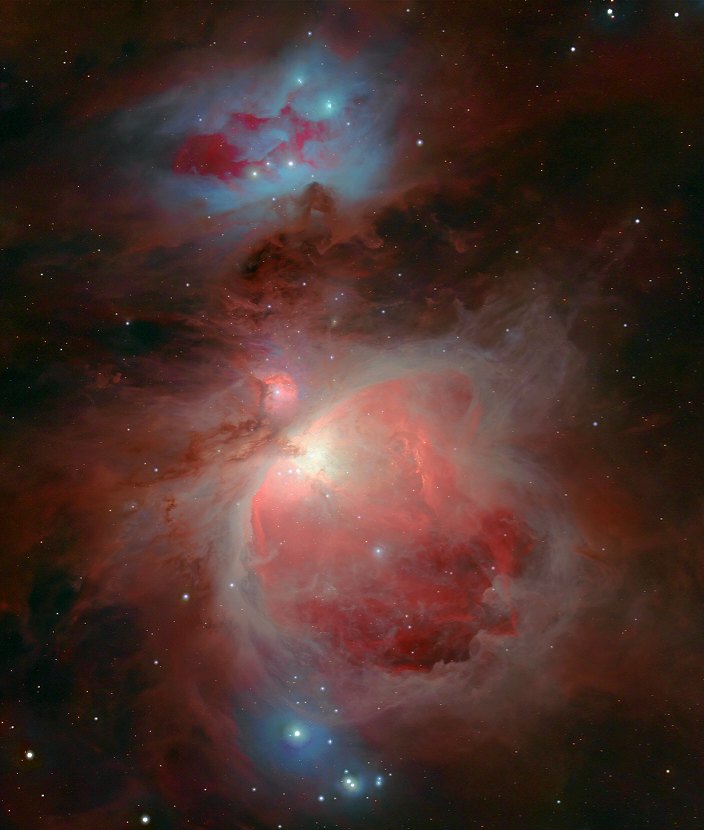
Image: Brian Knipfer
M42 blazes brightly in the constellation Orion. Popularly called the Orion Nebula, this stellar nursery has been known to many different cultures throughout human history. The nebula is only 1,500 light-years away, making it the closest large star-forming region to Earth and giving it a relatively bright apparent magnitude of 4. Because of its brightness and prominent location just below Orion's belt, M42 can be spotted with the naked eye, while offering an excellent peek at stellar birth for those with telescopes. It is best observed during January.
Just north of the famous Orion Nebula is a picturesque star-forming region in Orion's Sword that contains a lot of intricate dust — some of which appears blue because it reflects the light of bright embedded stars. The region's popular name is the Running Man Nebula because, looked at from the right, part of the brown dust appears to be running legs. Cataloged as Sharpless 279, the reflection nebula is not only part of the constellation of Orion, but part of the greater Orion molecular cloud complex. Light from the Running Man's bright stars, including 42 Orionis, is slowly destroying and reshaping the surrounding dust, which will likely be completely gone in about 10 million years. The nebula spans about 15 light-years and lies about 1,500 light-years away.
Elephant Trunk Nebula
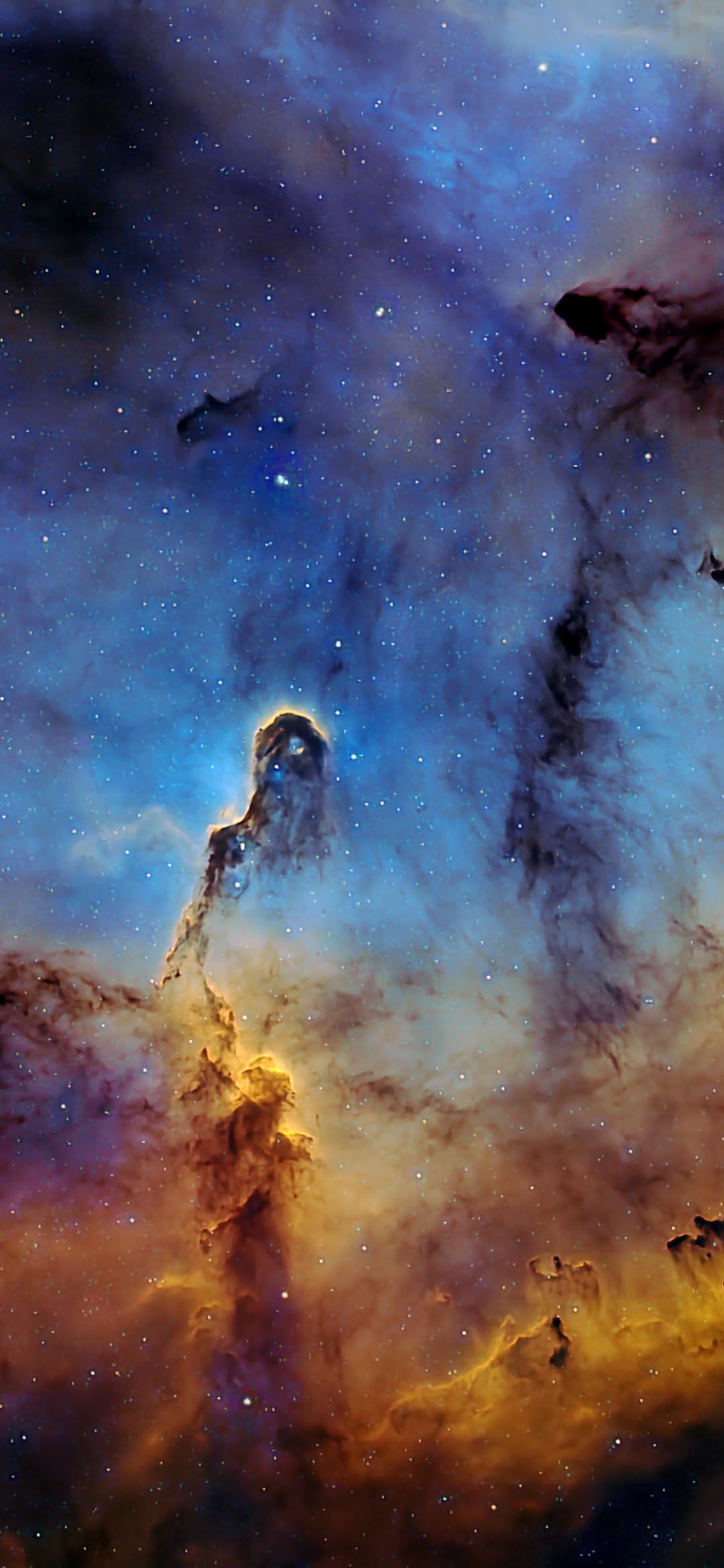
Image: Brian Knipfer
The Elephant Trunk Nebula (IC 1396A) is a dense, elongated globule of gas and dust located about 2,400 light-years away in the constellation Cepheus, embedded within the larger emission nebula IC 1396. It is illuminated and shaped by the massive star system HD 206267 and is an active site of star formation.
News from around the universe
A new window on the universe
The 2026 Nobel Prize in Physics was awarded to Francis Halzen for pioneering neutrino astronomy. His vision led to the creation of the IceCube Neutrino Observatory, a giant detector buried deep beneath Antarctica's ice that allows scientists to study the universe using elusive neutrinos rather than light. This breakthrough has opened an entirely new way to explore some of the cosmos's most extreme and energetic phenomena.
Read about it here: Nobel Prize in Physics 2026 — Prize announcement, NobelPrize.org.
Careers in astronomy
Here's an excellent source for careers in astronomy, from the American Astronomical Society: A New Universe to Explore: Careers in Astronomy (PDF).
Radio astronomy can be fun!
For more info, visit the Society of Amateur Radio Astronomers.
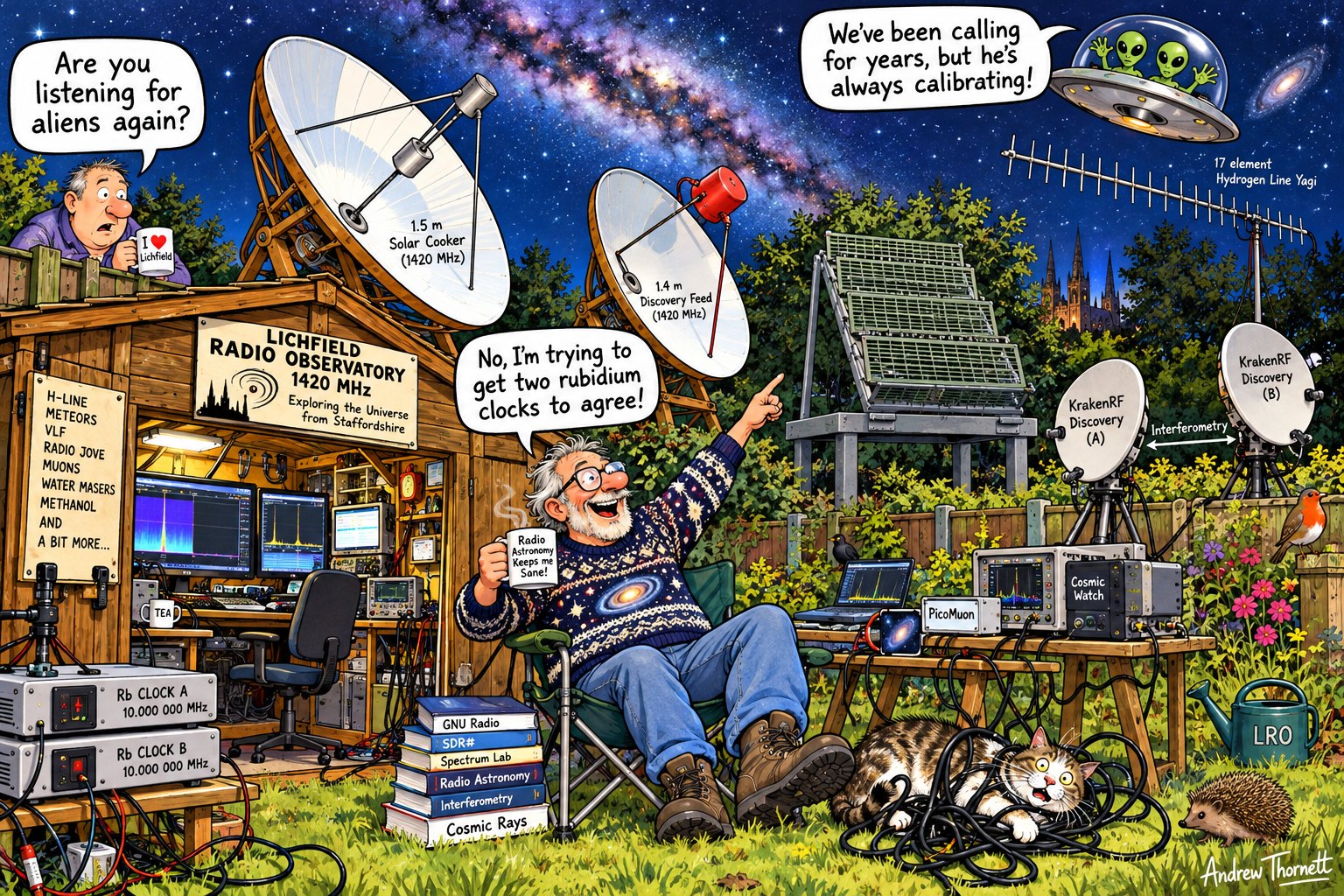
Cartoon: Andrew Thornett
Clear skies!